Glutathione (GSH) is a tripeptide composed of glutamate, cysteine, and glycine, present in virtually every mammalian cell. Often referred to as the 'master antioxidant,' it is the most abundant intracellular thiol and plays central roles in oxidative stress defence, xenobiotic detoxification, and maintenance of cellular redox homeostasis.
Glutathione functions as the principal intracellular redox buffer, existing in reduced (GSH) and oxidised (GSSG) forms. The ratio of GSH to GSSG is a key indicator of cellular redox status, with healthy cells maintaining a ratio of approximately 100:1. The thiol group on the cysteine residue is the active site, donating electrons to reactive oxygen species (ROS) and electrophilic xenobiotics.
As a direct antioxidant, GSH neutralises hydrogen peroxide, lipid peroxides, and other ROS through the glutathione peroxidase (GPx) enzyme family. This reaction converts GSH to GSSG, which is then recycled back to GSH by glutathione reductase using NADPH as an electron donor. Importantly, GSH also regenerates other antioxidants — it reduces oxidised vitamin C (dehydroascorbate back to ascorbate) and oxidised vitamin E, making it a central hub in the antioxidant defence network.
In Phase II detoxification, glutathione S-transferase (GST) enzymes conjugate GSH to electrophilic xenobiotics, drugs, and carcinogens, rendering them water-soluble for excretion. This detoxification pathway processes a wide range of environmental toxins and metabolic waste products. Injectable glutathione bypasses the significant first-pass metabolism and low oral bioavailability that limits oral supplementation, delivering GSH directly to the systemic circulation. Clinical research has investigated injectable GSH for applications including oxidative stress conditions, liver disease, and skin pigmentation (via inhibition of tyrosinase and melanin synthesis).
Glutathione: overview of its protective roles, measurement, and biosynthesis
Forman HJ, Zhang H, Rinna A. · Molecular Aspects of Medicine (2009)
Comprehensive review of glutathione biochemistry, covering its roles in antioxidant defence, xenobiotic metabolism, immune function, and the regulation of cellular redox state.
DOI: 10.1016/j.mam.2008.08.006Randomized controlled trial of oral glutathione supplementation on body stores of glutathione
Richie JP, Nichenametla S, Neidig W, et al. · European Journal of Nutrition (2015)
Demonstrated that oral glutathione supplementation increased body stores of GSH, though the study highlighted the bioavailability limitations of oral delivery compared to parenteral administration.
DOI: 10.1007/s00394-014-0706-zGlutathione and its antiaging and antimelanogenic effects
Weschawalit S, Thongthip S, Phutrakool P, Asawanonda P. · Clinical, Cosmetic and Investigational Dermatology (2017)
Reviewed evidence for glutathione's effects on skin aging and melanin production, including its inhibition of tyrosinase activity and shift from eumelanin to phaeomelanin synthesis.
DOI: 10.2147/CCID.S128339Glutathione!
Pizzorno J. · Integrative Medicine: A Clinician's Journal (2014)
Clinical review of glutathione depletion in disease states including liver disease, pulmonary conditions, and neurodegenerative disorders, with discussion of repletion strategies.
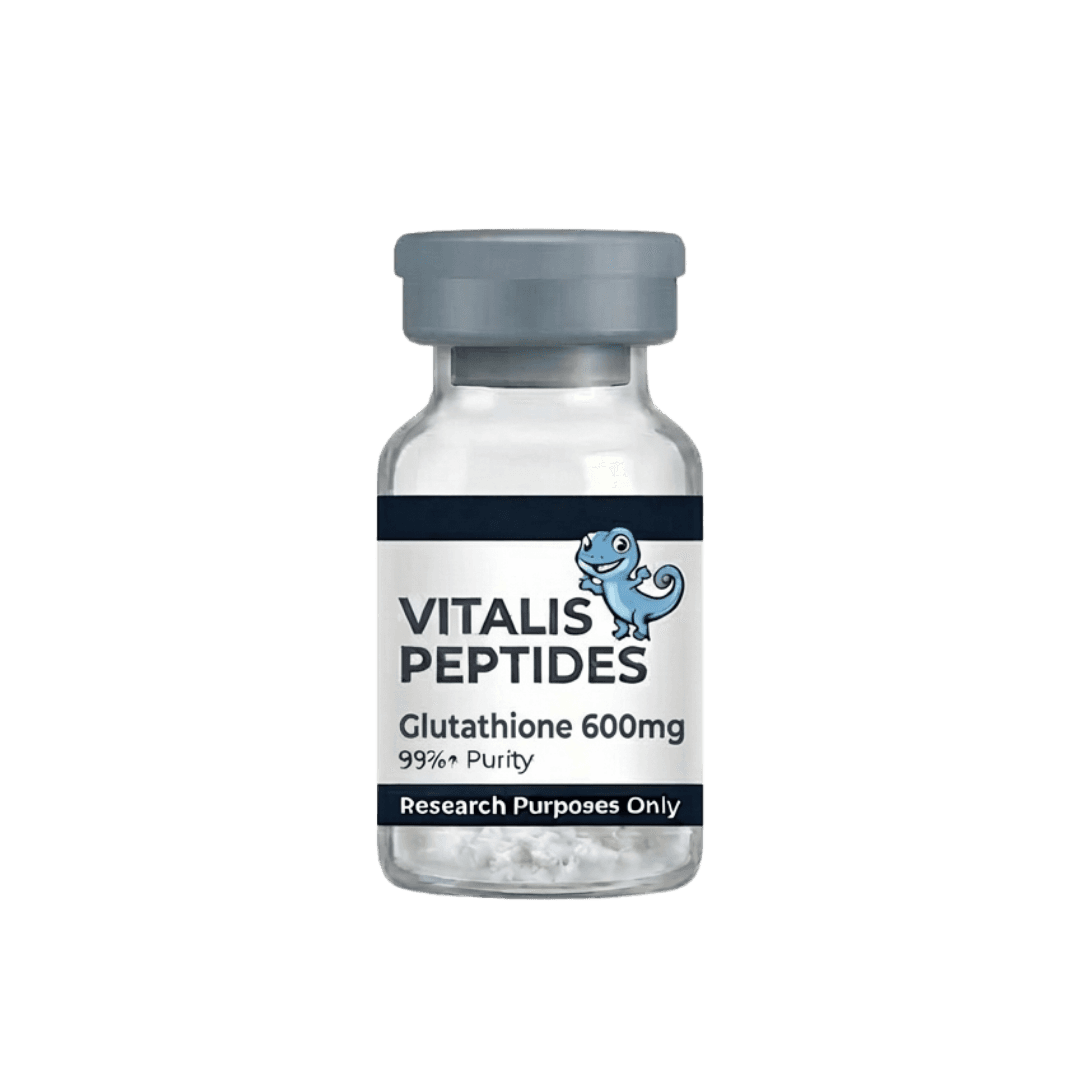
Glutathione is provided at a higher mass (600 mg) than most peptide vials. Direct bacteriostatic water along the vial wall and allow complete dissolution. The reconstituted solution should be clear and colourless. Glutathione is sensitive to oxidation — minimise air exposure.
Use reconstitution calculatorLyophilised: store at or below 5 °C for up to 12 months. Protect from light — glutathione is light-sensitive. Reconstituted: refrigerate at 2–8 °C and use within 30 days. Minimise exposure to air to prevent oxidation of the thiol group.
Oral glutathione has poor bioavailability due to extensive first-pass metabolism by GI enzymes (particularly gamma-glutamyltransferase) and hepatic processing. Injectable glutathione bypasses these barriers, delivering GSH directly to the systemic circulation at significantly higher bioavailable concentrations.
The ratio of reduced glutathione (GSH) to oxidised glutathione (GSSG) is a key indicator of cellular redox status. Healthy cells maintain approximately a 100:1 ratio. A declining ratio indicates oxidative stress and is associated with ageing, disease states, and cellular damage.
Glutathione inhibits tyrosinase, the rate-limiting enzyme in melanin production, and shifts melanin synthesis from darker eumelanin to lighter phaeomelanin. These mechanisms have made injectable glutathione a subject of dermatological research, though rigorous clinical trial data remains limited.
Yes. Glutathione is central to the antioxidant recycling network — it regenerates oxidised vitamin C (dehydroascorbate to ascorbate) and participates in the regeneration of vitamin E. This interconnection is why GSH is sometimes called the 'master antioxidant.'
For research and laboratory purposes only. Not for human use. These statements have not been evaluated by the Therapeutic Goods Administration (TGA). This product is not intended to diagnose, treat, cure, or prevent any disease.