BPC-157 (Body Protection Compound-157) is a synthetic pentadecapeptide derived from a protein fragment found in human gastric juice. It has been extensively studied in preclinical models for its effects on tissue repair, angiogenesis, and cytoprotection, with over 500 peer-reviewed publications examining its mechanisms.
BPC-157 exerts its effects through multiple interconnected pathways centred on tissue protection and regeneration. A primary mechanism involves modulation of the nitric oxide (NO) system — BPC-157 has been shown to upregulate endothelial nitric oxide synthase (eNOS), promoting vasodilation and angiogenesis at injury sites. This pro-angiogenic activity accelerates the formation of new blood vessels, which is critical for delivering oxygen and nutrients to damaged tissues.
Additionally, BPC-157 interacts with the FAK-paxillin signalling pathway, promoting cell migration and adhesion processes essential for wound healing. Preclinical studies have demonstrated upregulation of growth factors including VEGF (vascular endothelial growth factor) and EGF (epidermal growth factor) receptor expression. The compound also appears to modulate the dopaminergic system, with studies showing protective effects against dopamine-related neurotoxicity.
In gastrointestinal models, BPC-157 has demonstrated cytoprotective effects, reducing damage from NSAIDs, alcohol, and other gastric irritants. This aligns with its origin as a gastric juice-derived fragment. A 2025 systematic review by Vasireddi et al. (Case Western Reserve University) analysed 544 studies and confirmed consistent tissue-protective findings across musculoskeletal, gastrointestinal, and neurological models, though the absence of human clinical trials remains a key limitation in the evidence base.
Stable gastric pentadecapeptide BPC 157: novel therapy in gastrointestinal tract
Sikiric P, Seiwerth S, Rucman R, et al. · Current Pharmaceutical Design (2011)
Comprehensive review of BPC-157 across gastrointestinal models, documenting cytoprotective effects, anti-ulcer activity, and modulation of NO and prostaglandin systems.
DOI: 10.2174/138161211796197205The promoting effect of pentadecapeptide BPC 157 on tendon healing involves tendon outgrowth, cell survival, and cell migration
Chang CH, Tsai WC, Lin MS, et al. · Journal of Applied Physiology (2011)
Demonstrated that BPC-157 promoted tendon fibroblast outgrowth and cell survival via activation of the FAK-paxillin signalling pathway in a rat Achilles tendon model.
DOI: 10.1152/japplphysiol.00945.2010BPC 157: a review of the current literature and therapeutic applications in musculoskeletal injuries
Vasireddi A, Hilliard J, Goad S, et al. · Journal of Orthopaedic Surgery and Research (2025)
Systematic review of 544 studies confirming consistent tissue-protective effects across musculoskeletal, gastrointestinal, and neurological models, while noting the absence of human clinical trials.
Novel cytoprotective mediator, stable gastric pentadecapeptide BPC 157. Vascular recruitment and gastrointestinal tract healing
Sikiric P, Rucman R, Turkovic B, et al. · Current Pharmaceutical Design (2018)
Detailed the angiogenic and vascular recruitment mechanisms of BPC-157, including collateral vessel formation and endothelial cell proliferation at injury sites.
DOI: 10.2174/1381612824666180515125056Add bacteriostatic water slowly along the vial wall. Allow the lyophilised pellet to dissolve — do not shake. BPC-157 is highly stable in solution compared to many peptides. Store reconstituted vial refrigerated.
Use reconstitution calculatorLyophilised: store at or below 5 °C for up to 12 months. Reconstituted: refrigerate at 2–8 °C and use within 30 days. BPC-157 demonstrates notable stability but should still be protected from prolonged heat and light exposure.
BPC-157 is a synthetic pentadecapeptide corresponding to a partial sequence of a protein found in human gastric juice called Body Protection Compound. It was first isolated and characterised by researchers at the University of Zagreb, Croatia.
BPC-157 has been studied in a wide range of preclinical models including tendon and ligament transection, muscle crush injury, bone fracture, gastric ulcer, inflammatory bowel disease, nerve transection, and dopamine-system toxicity models. A 2025 systematic review identified over 544 published studies.
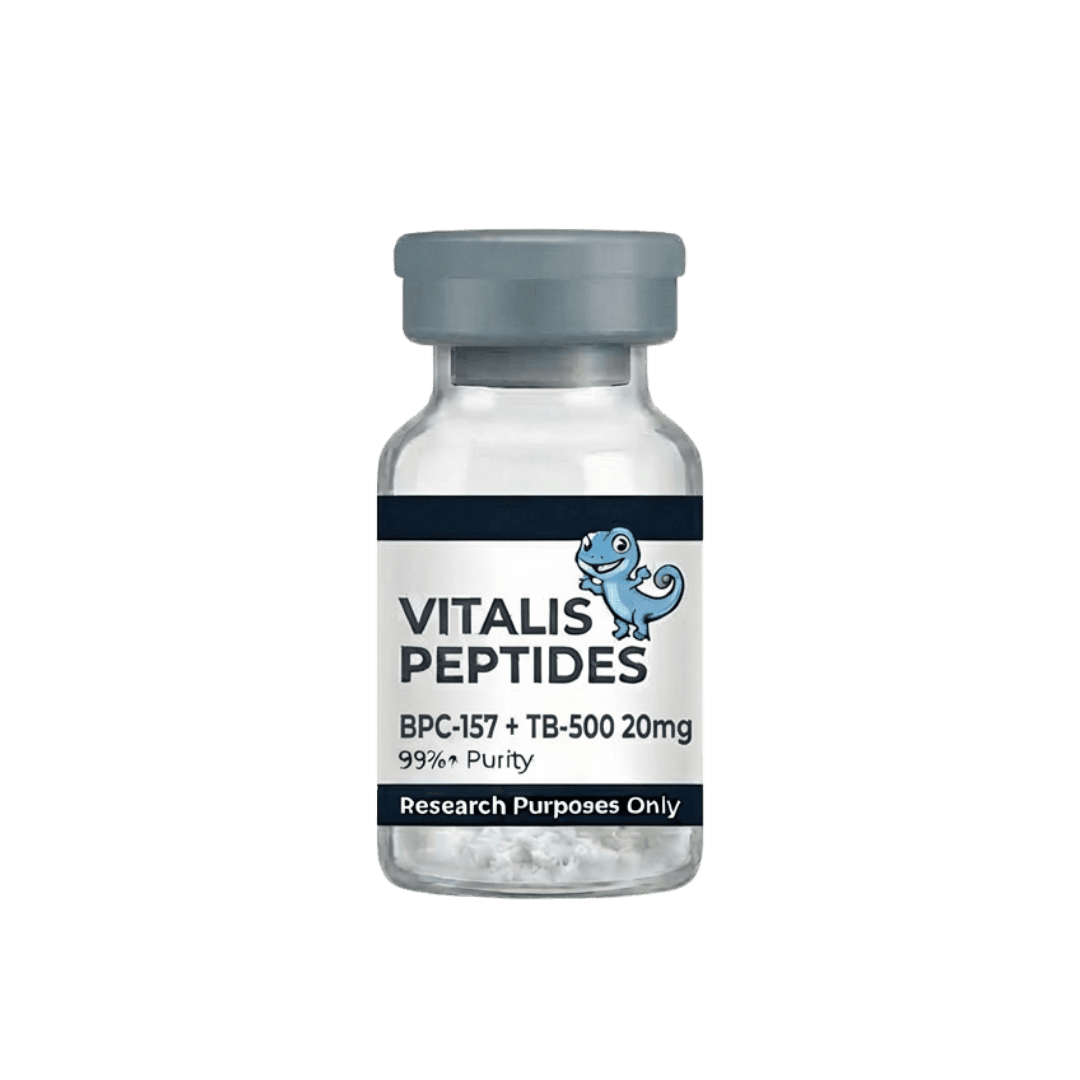
BPC-157 primarily acts through nitric oxide modulation and angiogenesis (new blood vessel formation), while TB-500 operates via G-actin sequestration to promote cell migration. They are frequently studied together (the 'Wolverine Stack') for complementary tissue repair mechanisms.
As of the current literature, no completed human clinical trials have been published for BPC-157. All available data comes from preclinical (cell culture and animal) models. This is a key limitation noted in every systematic review of the compound.
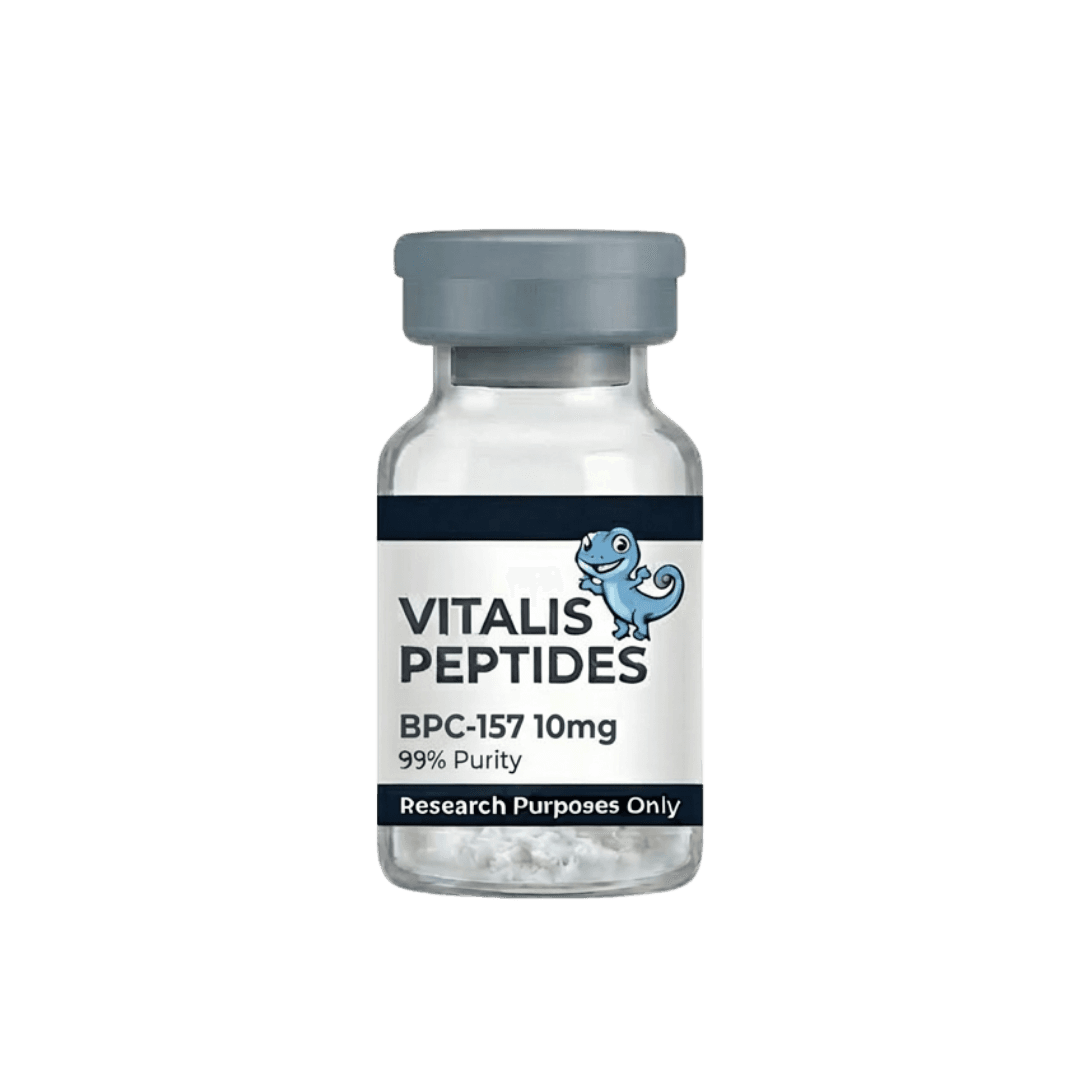
For research and laboratory purposes only. Not for human use. These statements have not been evaluated by the Therapeutic Goods Administration (TGA). This product is not intended to diagnose, treat, cure, or prevent any disease.