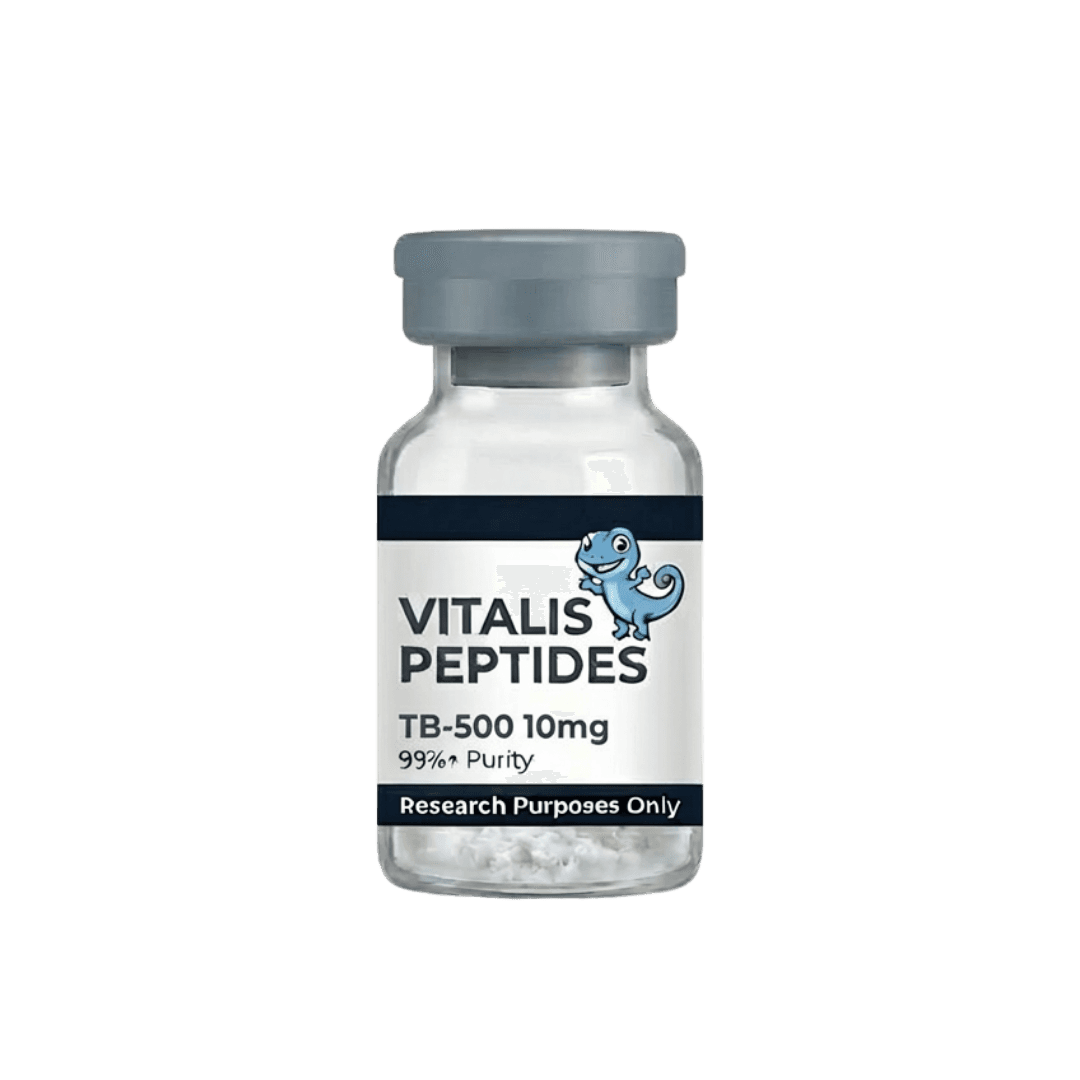
TB-500 is a synthetic peptide representing the active region of Thymosin Beta-4 (Tβ4), a naturally occurring 43-amino acid protein involved in cell migration, wound healing, and tissue repair. It has been studied extensively in preclinical models for its role in actin regulation and systemic recovery pathways.
TB-500 functions primarily through its interaction with monomeric (G-) actin, the building block of the cellular cytoskeleton. The active sequence LKKTET (amino acids 17-23 of Thymosin Beta-4) binds G-actin and promotes actin polymerisation, driving cytoskeletal reorganisation that is essential for cell migration, division, and morphogenesis. This actin-regulatory activity is central to wound healing, where rapid cell migration to injury sites determines repair speed.
Beyond actin regulation, TB-500 has been studied for anti-inflammatory properties. Preclinical models have demonstrated downregulation of pro-inflammatory cytokines and modulation of NF-κB signalling. In cardiac research, Thymosin Beta-4 was shown to promote epicardial progenitor cell activation and migration, suggesting cardioprotective mechanisms that extend beyond simple wound healing.
TB-500 also upregulates laminin and fibronectin expression, extracellular matrix proteins that provide the structural scaffolding for tissue repair. Studies in dermal wound, corneal injury, and musculoskeletal models have consistently demonstrated accelerated repair processes. Importantly, TB-500 appears to act systemically rather than locally — a property attributed to its small molecular size and high tissue permeability, which differentiates it from larger growth factor molecules that require local administration.
Thymosin β4: actin-sequestering protein moonlights to repair injured tissues
Goldstein AL, Hannappel E, Kleinman HK. · Trends in Molecular Medicine (2005)
Landmark review describing the dual role of Thymosin Beta-4 as both an actin-sequestering protein and a tissue repair promoter across multiple preclinical models.
DOI: 10.1016/j.molmed.2005.06.004Thymosin β4 induces adult epicardial progenitor mobilization and neovascularization
Smart N, Risebro CA, Melville AAD, et al. · Nature (2007)
Demonstrated that Thymosin Beta-4 activates epicardial progenitor cells and promotes neovascularisation in adult mouse hearts after injury, suggesting cardiac repair potential.
DOI: 10.1038/nature05383The actin binding site on thymosin β4 promotes angiogenesis
Philp D, Huff T, Gho YS, Hannappel E, Kleinman HK. · FASEB Journal (2003)
Identified the actin-binding domain of Thymosin Beta-4 as essential for its pro-angiogenic activity, linking cytoskeletal regulation to blood vessel formation.
DOI: 10.1096/fj.03-0291fjeThymosin β4: structure, function, and biological properties supporting current and future clinical applications
Crockford D, Turjman N, Allan C, Angel J. · Annals of the New York Academy of Sciences (2010)
Comprehensive review of Thymosin Beta-4 biology and its clinical potential, covering wound healing, cardioprotection, and anti-inflammatory applications.
DOI: 10.1111/j.1749-6632.2010.05492.xDirect bacteriostatic water gently along the vial wall. Allow full dissolution before use — TB-500 lyophilised powder typically dissolves within 1–2 minutes. Do not shake. Swirl gently if needed.
Use reconstitution calculatorLyophilised: store at or below 5 °C for up to 12 months. Reconstituted: refrigerate at 2–8 °C and use within 30 days. Avoid repeated freeze-thaw cycles.
TB-500 is a synthetic peptide corresponding to the full 43-amino acid sequence of Thymosin Beta-4 (Tβ4). The name 'TB-500' is used commercially to refer to the synthetic research form. The active actin-binding region is the LKKTET sequence at positions 17-23.
Unlike larger growth factors that typically act locally, TB-500's relatively small molecular size (~4,963 Da) allows for high tissue permeability and systemic distribution. Preclinical studies have observed effects distant from the administration site, suggesting systemic bioavailability.
TB-500/Thymosin Beta-4 has been studied in dermal wound healing, corneal injury, cardiac ischaemia-reperfusion, skeletal muscle injury, tendon repair, and inflammatory models. The Nature 2007 study by Smart et al. on cardiac progenitor cell mobilisation was a landmark publication.
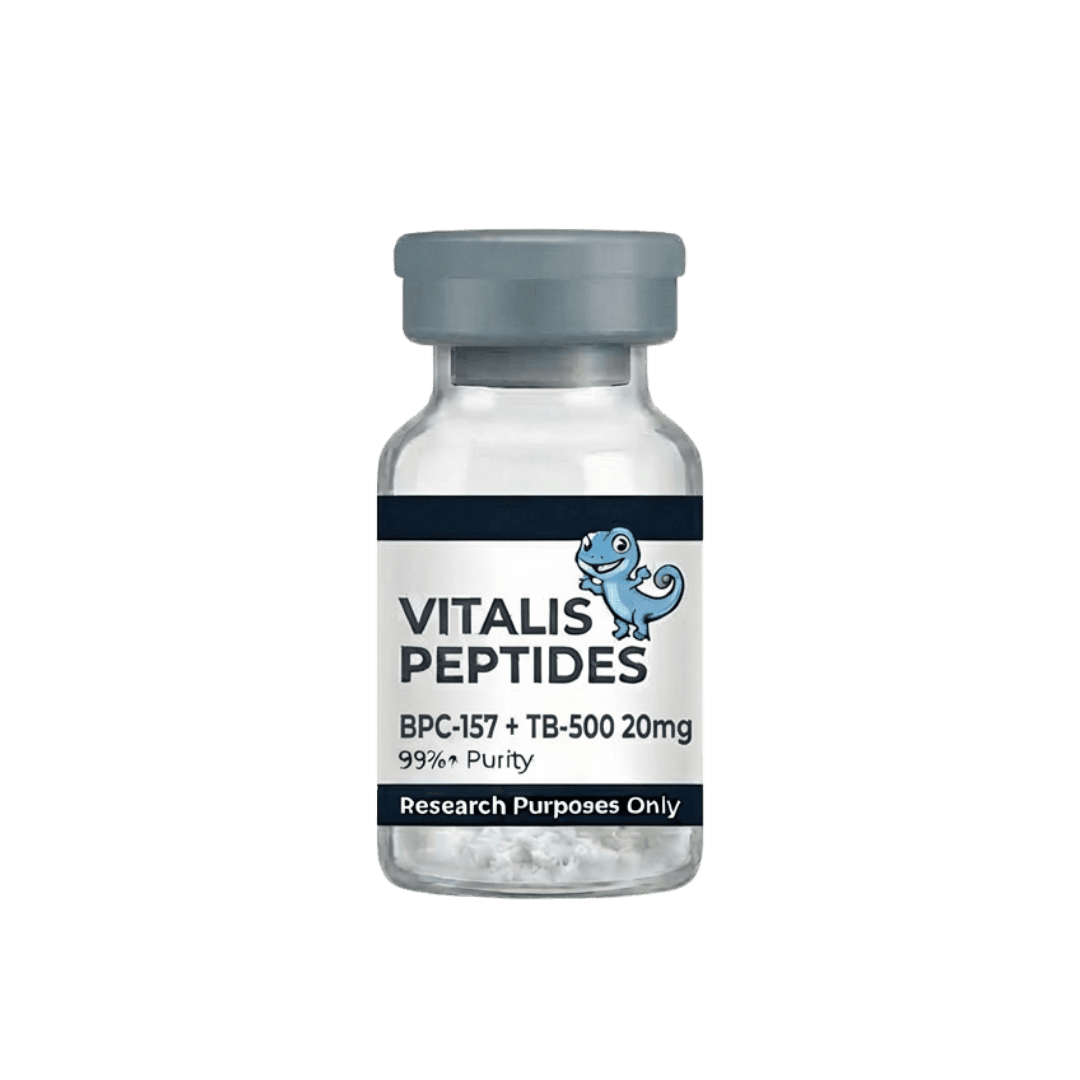
The Wolverine Stack combines TB-500 with BPC-157. TB-500 provides actin-mediated cell migration while BPC-157 provides angiogenesis and nitric oxide modulation — complementary mechanisms studied for comprehensive tissue repair research.
For research and laboratory purposes only. Not for human use. These statements have not been evaluated by the Therapeutic Goods Administration (TGA). This product is not intended to diagnose, treat, cure, or prevent any disease.