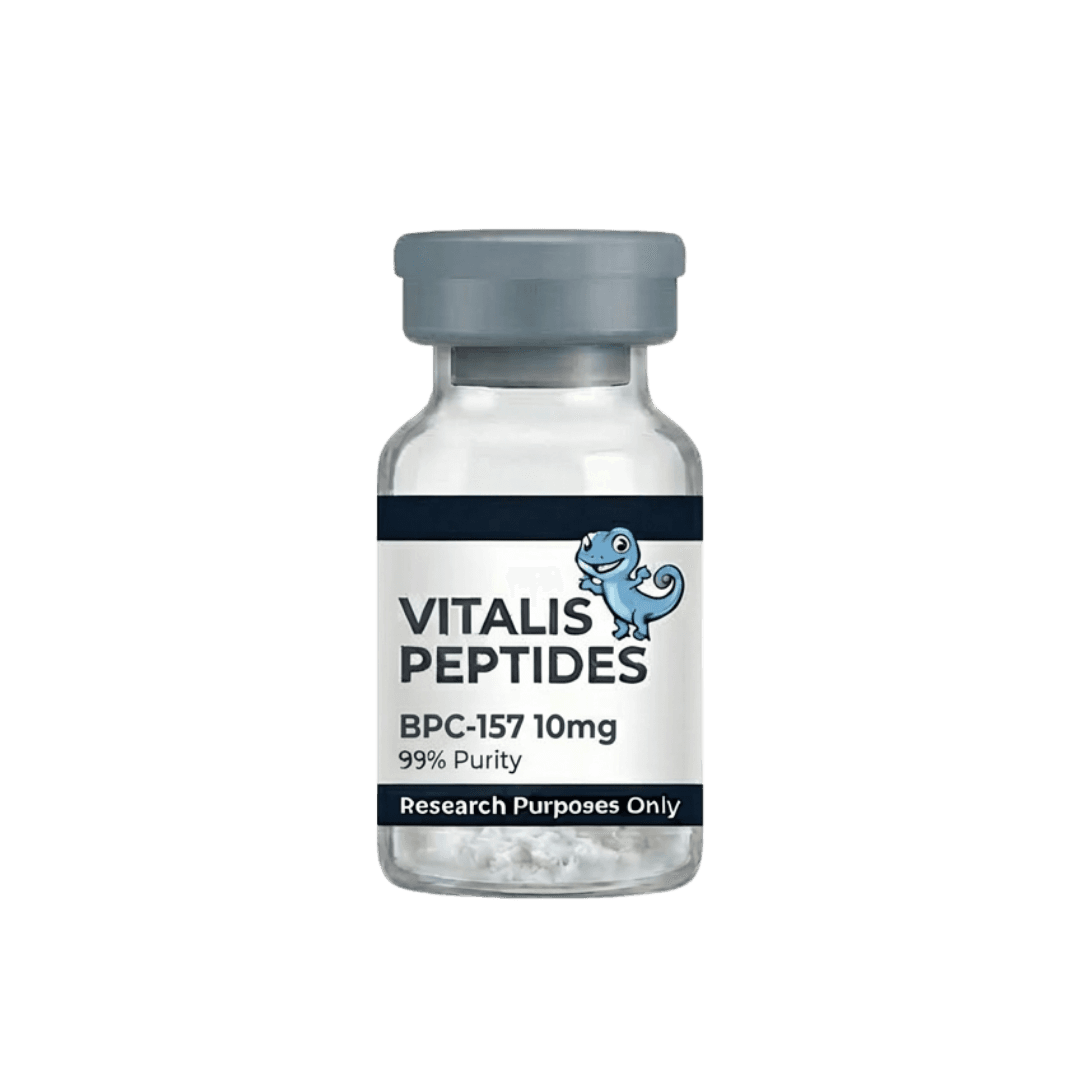
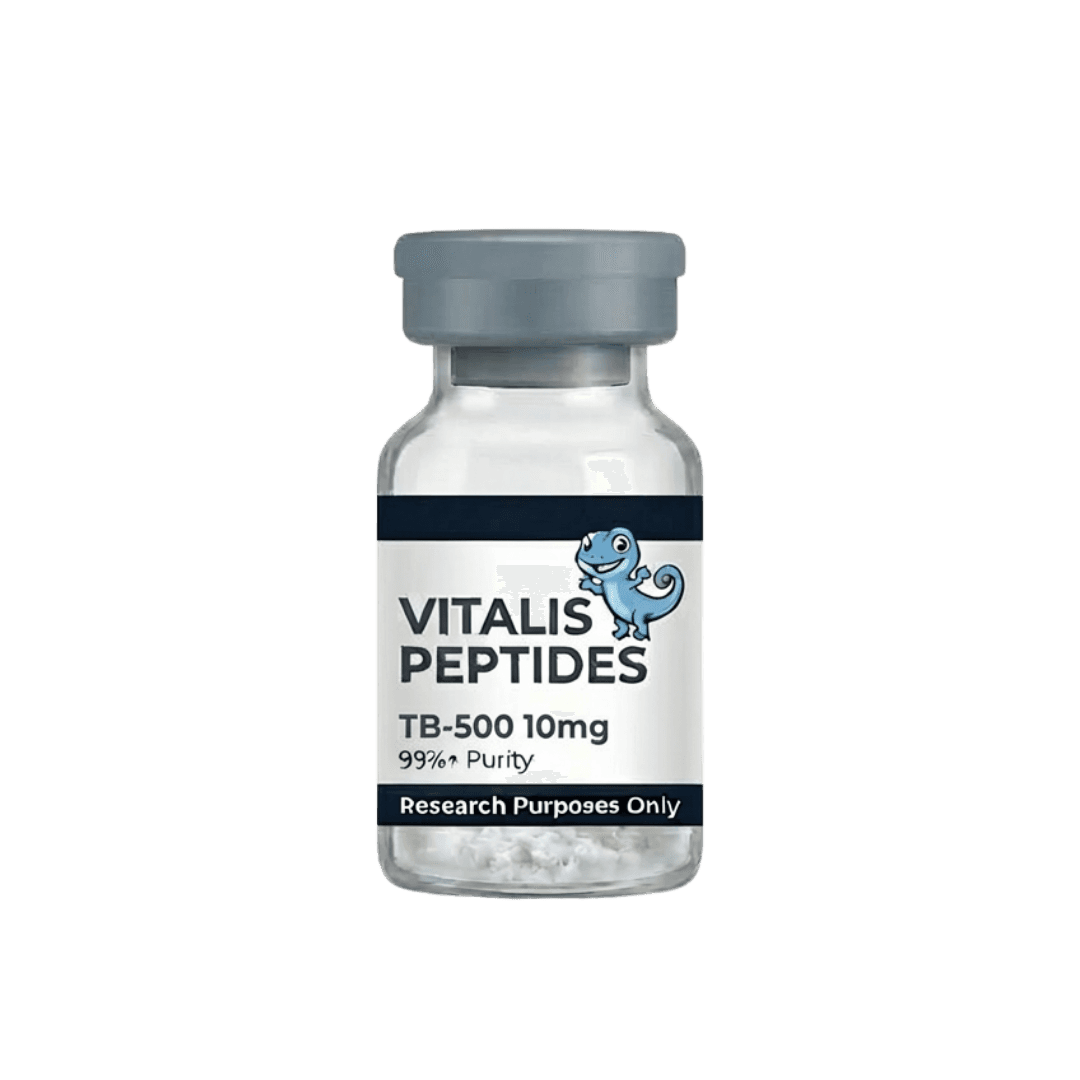
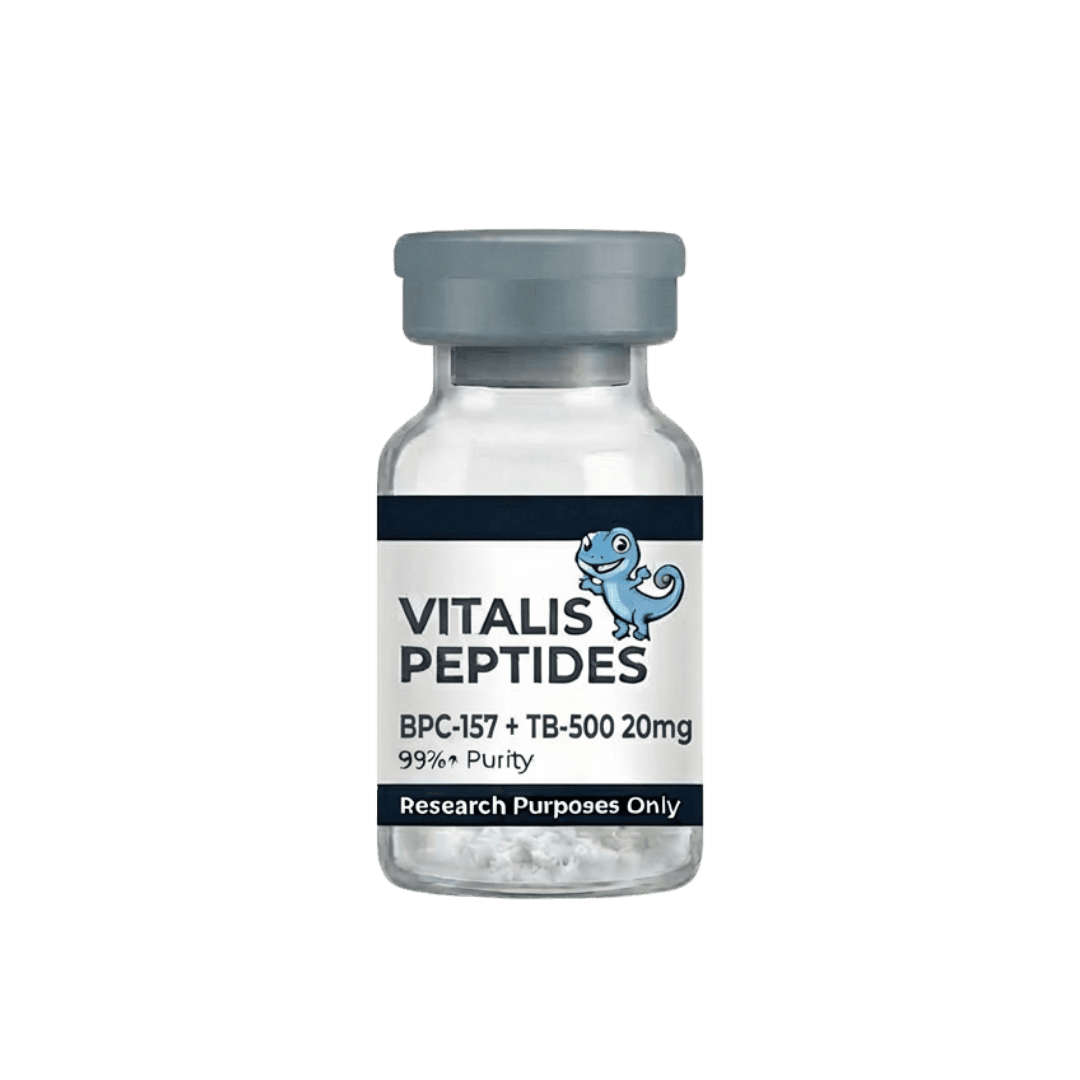
The BPC-157 + TB-500 blend, commonly referred to as the Wolverine Stack, combines two of the most-studied tissue repair peptides into a single reconstitution. BPC-157 promotes angiogenesis and nitric oxide modulation while TB-500 facilitates cell migration via actin regulation — complementary mechanisms that have driven widespread research interest.
The Wolverine Stack combines two mechanistically distinct tissue repair peptides. BPC-157 operates primarily through the nitric oxide system, upregulating endothelial nitric oxide synthase (eNOS) to promote angiogenesis — the formation of new blood vessels at injury sites. It also modulates VEGF and EGF receptor signalling, the FAK-paxillin cell migration pathway, and has demonstrated cytoprotective effects across gastrointestinal and musculoskeletal models.
TB-500, a synthetic analogue of the active region of Thymosin Beta-4, functions through G-actin sequestration. By binding monomeric actin, TB-500 promotes actin polymerisation and cytoskeletal reorganisation, which drives cell migration, proliferation, and differentiation. This mechanism is particularly relevant to wound healing, where rapid cell migration to injury sites is critical. TB-500 has also been studied for anti-inflammatory and cardioprotective effects.
The rationale for combining these compounds in research is their complementary mechanisms: BPC-157 establishes the vascular infrastructure for repair (angiogenesis, nutrient delivery) while TB-500 promotes the cellular migration and proliferation needed to populate and remodel damaged tissue. Preclinical researchers have studied this combination in musculoskeletal, tendon, and soft tissue repair models, though published data on the specific combination (versus each compound individually) remains limited.
Stable gastric pentadecapeptide BPC 157: novel therapy in gastrointestinal tract
Sikiric P, Seiwerth S, Rucman R, et al. · Current Pharmaceutical Design (2011)
Foundational review of BPC-157 documenting its cytoprotective and tissue-repair mechanisms across gastrointestinal and soft tissue models.
DOI: 10.2174/138161211796197205Thymosin β4: actin-sequestering protein moonlights to repair injured tissues
Goldstein AL, Hannappel E, Kleinman HK. · Trends in Molecular Medicine (2005)
Seminal review describing how Thymosin Beta-4 (the parent protein of TB-500) promotes tissue repair through actin regulation, cell migration, and anti-inflammatory mechanisms.
DOI: 10.1016/j.molmed.2005.06.004Thymosin β4: structure, function, and biological properties supporting current and future clinical applications
Crockford D, Turjman N, Allan C, Angel J. · Annals of the New York Academy of Sciences (2010)
Comprehensive review of Thymosin Beta-4 biology, covering wound healing, anti-inflammatory, and cardioprotective mechanisms relevant to TB-500 research.
DOI: 10.1111/j.1749-6632.2010.05492.xThe promoting effect of pentadecapeptide BPC 157 on tendon healing involves tendon outgrowth, cell survival, and cell migration
Chang CH, Tsai WC, Lin MS, et al. · Journal of Applied Physiology (2011)
Demonstrated BPC-157 promotion of tendon fibroblast outgrowth via FAK-paxillin signalling — a key mechanism complementary to TB-500's actin-mediated cell migration.
DOI: 10.1152/japplphysiol.00945.2010Both peptides are co-lyophilised in a single vial. Reconstitute with bacteriostatic water directed along the vial wall. Allow full dissolution without agitation. The blend simplifies research protocols by eliminating the need for separate reconstitution and dosing.
Use reconstitution calculatorLyophilised: store at or below 5 °C for up to 12 months. Reconstituted: refrigerate at 2–8 °C and use within 30 days. Protect from light and avoid repeated freeze-thaw cycles.
Their mechanisms are complementary: BPC-157 promotes angiogenesis (new blood vessel formation) and nitric oxide modulation to establish vascular infrastructure, while TB-500 promotes cell migration via actin regulation to populate injured tissue. Researchers study them together for potentially synergistic tissue repair effects.
The pre-blended Wolverine Stack contains both BPC-157 and TB-500 co-lyophilised in a single vial for research convenience. The individual compounds are the same as those available separately. The blend eliminates the need for separate reconstitution and combined dosing calculations.
While each compound has extensive individual preclinical data (BPC-157 in tendon, GI, and nerve models; TB-500 in wound, cardiac, and musculoskeletal models), published data on the specific combination is more limited. The combination rationale is based on complementary mechanism of action rather than combined-study data.
For research and laboratory purposes only. Not for human use. These statements have not been evaluated by the Therapeutic Goods Administration (TGA). This product is not intended to diagnose, treat, cure, or prevent any disease.