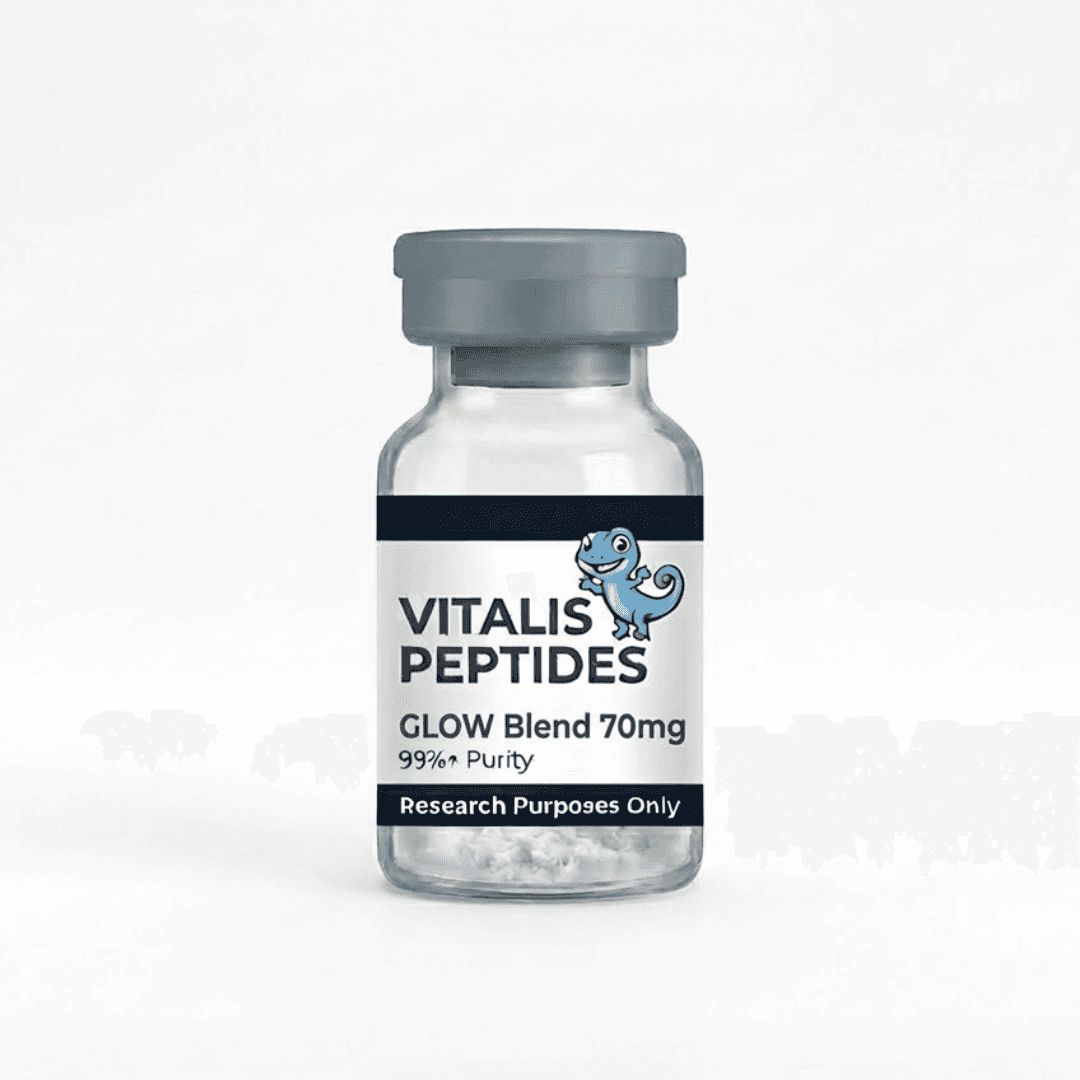
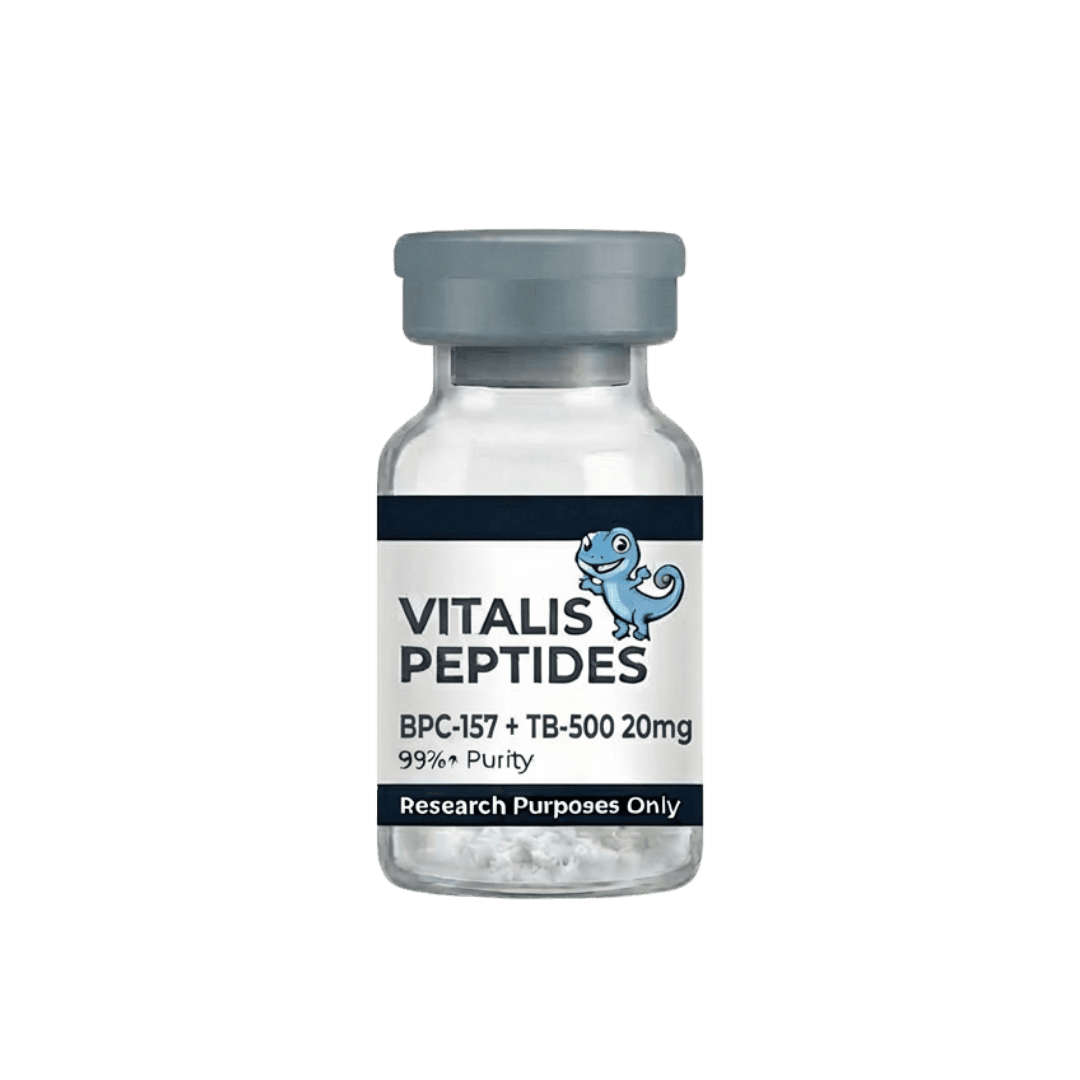
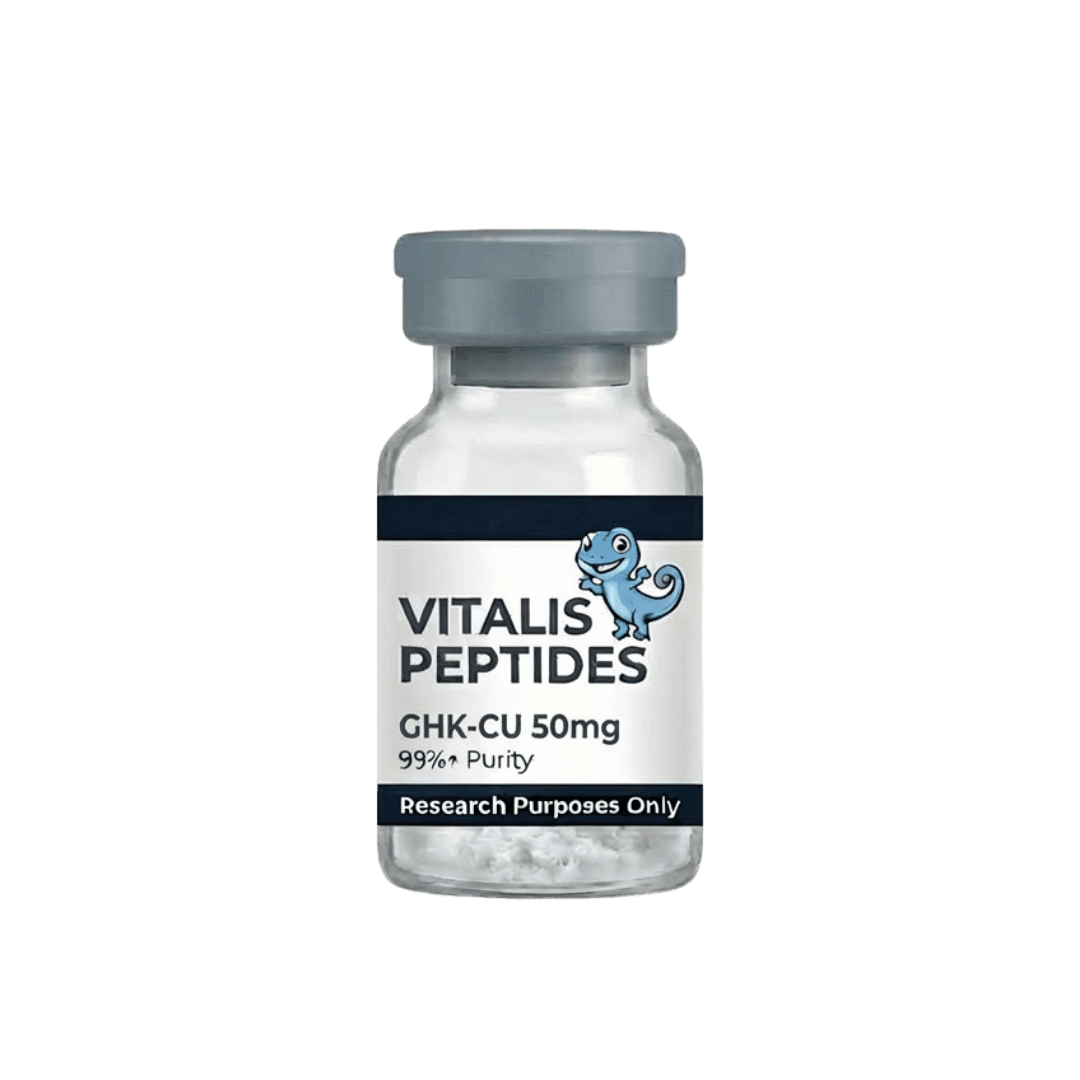
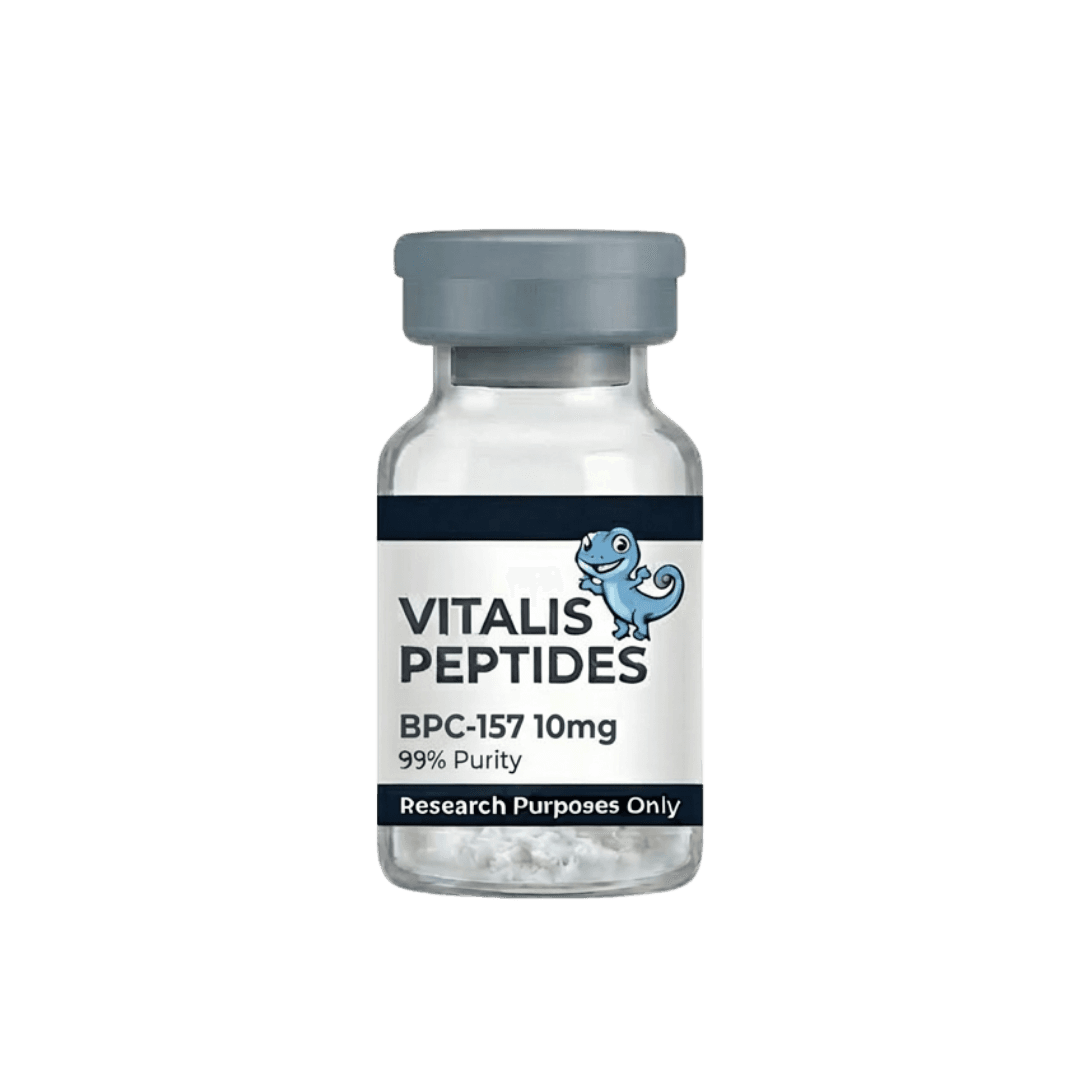
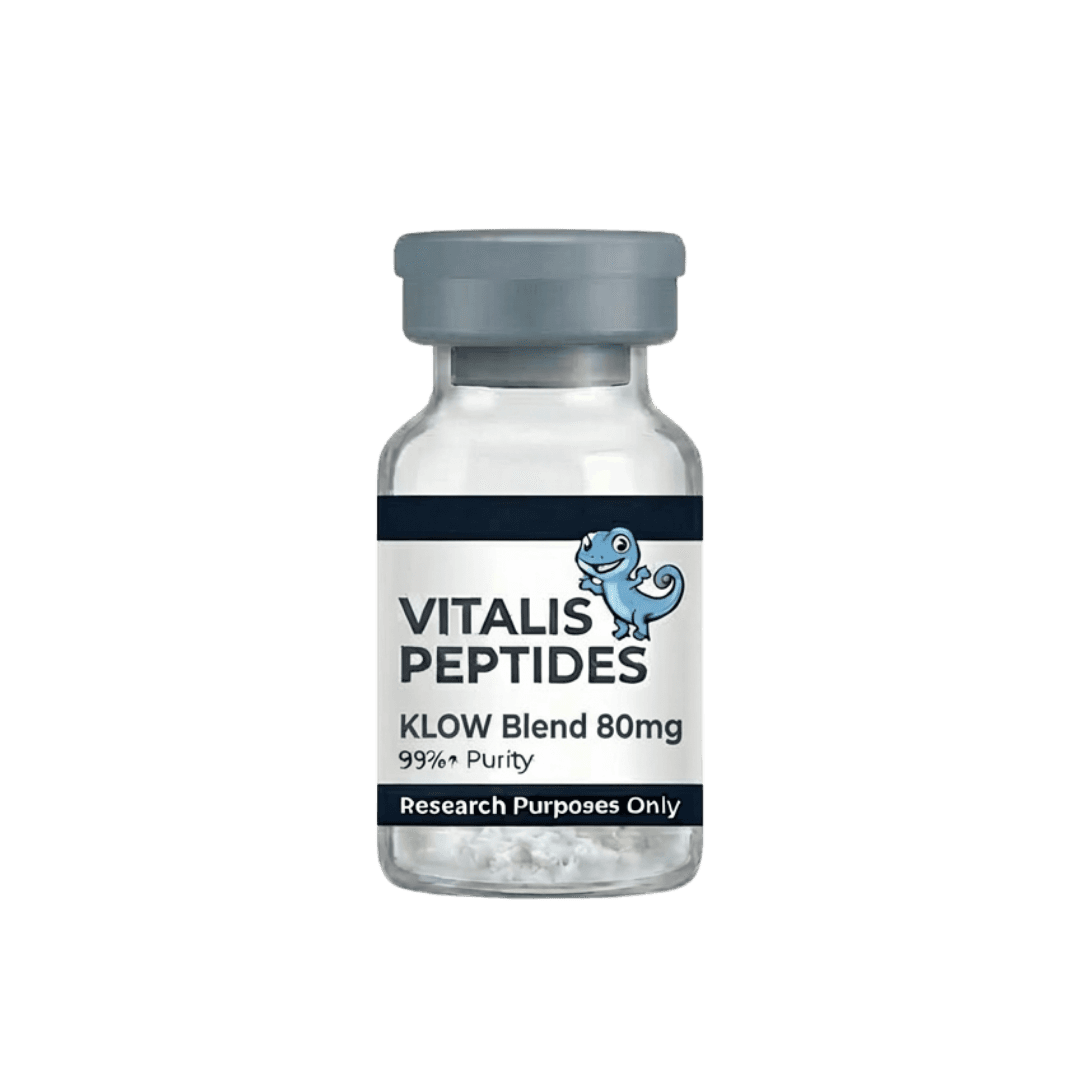
The KLOW Blend is a four-compound peptide stack combining GHK-Cu (tissue remodelling and gene expression modulation), TB-500 (cell migration via actin regulation), BPC-157 (angiogenesis and nitric oxide modulation), and KPV (anti-inflammatory tripeptide from α-MSH). It represents a comprehensive approach to regenerative research, targeting multiple complementary repair and recovery pathways.
The KLOW Blend combines four peptides with distinct but complementary mechanisms targeting tissue repair, anti-inflammation, and cellular regeneration.
GHK-Cu serves as the tissue remodelling component, delivering copper to metalloenzymes (lysyl oxidase, SOD) and modulating the expression of over 4,000 genes involved in collagen synthesis, extracellular matrix production, and antioxidant defence. TB-500 provides the cell migration component, operating through G-actin sequestration to promote cytoskeletal reorganisation, cell migration to injury sites, and laminin/fibronectin upregulation. BPC-157 contributes the angiogenic component, upregulating eNOS for nitric oxide-mediated vasodilation and new blood vessel formation, along with VEGF and EGF receptor modulation.
KPV (Lys-Pro-Val) is a tripeptide corresponding to the C-terminal fragment of alpha-melanocyte-stimulating hormone (α-MSH). Despite its small size, KPV has demonstrated potent anti-inflammatory activity in preclinical models. It inhibits NF-κB nuclear translocation, reducing transcription of pro-inflammatory cytokines including TNF-α, IL-1β, and IL-6. KPV also modulates inflammasome activation and has shown effects on intestinal inflammation in colitis models.
The rationale for combining these four compounds is to address the major phases of tissue repair simultaneously: inflammation control (KPV), vascular recruitment (BPC-157), cell migration and proliferation (TB-500), and matrix remodelling and gene expression (GHK-Cu). Published data on the specific four-compound combination is not available — the blend rationale is based on the complementary mechanisms of each individual component.
GHK peptide as a natural modulator of multiple cellular pathways in skin regeneration
Pickart L, Vasquez-Soltero JM, Margolina A. · BioMed Research International (2015)
Comprehensive review of GHK-Cu's gene expression modulation and tissue regeneration effects, establishing the mechanistic basis for its inclusion in multi-peptide recovery stacks.
DOI: 10.1155/2015/648108Thymosin β4: actin-sequestering protein moonlights to repair injured tissues
Goldstein AL, Hannappel E, Kleinman HK. · Trends in Molecular Medicine (2005)
Foundational review of Thymosin Beta-4 (parent protein of TB-500) tissue repair mechanisms via actin regulation and cell migration.
DOI: 10.1016/j.molmed.2005.06.004Stable gastric pentadecapeptide BPC 157: novel therapy in gastrointestinal tract
Sikiric P, Seiwerth S, Rucman R, et al. · Current Pharmaceutical Design (2011)
Review of BPC-157's tissue-protective mechanisms including angiogenesis, nitric oxide modulation, and cytoprotection across gastrointestinal and soft tissue models.
DOI: 10.2174/138161211796197205α-MSH related peptides: a new class of anti-inflammatory and immunomodulating drugs
Luger TA, Brzoska T. · Annals of the Rheumatic Diseases (2007)
Reviewed the anti-inflammatory mechanisms of α-MSH-derived peptides including KPV, documenting NF-κB inhibition, cytokine modulation, and potential applications in inflammatory conditions.
DOI: 10.1136/ard.2007.079780All four peptides are co-lyophilised. The reconstituted solution may have a slight blue-green tint due to the copper in GHK-Cu — this is normal. Direct bacteriostatic water along the vial wall and allow full dissolution. Do not shake.
Use reconstitution calculatorLyophilised: store at or below 5 °C for up to 12 months. Reconstituted: refrigerate at 2–8 °C and use within 30 days. Protect from light.
KLOW is a proprietary blend name referring to its constituent peptides: KPV, and the regenerative trio of GHK-Cu (copper peptide), TB-500, and BPC-157. The blend combines anti-inflammatory, tissue remodelling, cell migration, and angiogenic mechanisms in a single reconstitution.
KPV (Lys-Pro-Val) is the C-terminal tripeptide of alpha-MSH. Despite being only three amino acids, it has demonstrated potent anti-inflammatory activity by inhibiting NF-κB nuclear translocation and reducing pro-inflammatory cytokines. It adds a dedicated anti-inflammatory component to the regenerative mechanisms of the other three peptides.
No. Published research is available for each individual constituent compound, but not for the specific four-compound combination. The blend rationale is based on complementary mechanisms — inflammation control (KPV), angiogenesis (BPC-157), cell migration (TB-500), and tissue remodelling (GHK-Cu).
The blue-green tint is due to the copper (II) ion in GHK-Cu. This is completely normal and confirms the presence of the copper peptide complex. A colourless solution would suggest copper dissociation.
For research and laboratory purposes only. Not for human use. These statements have not been evaluated by the Therapeutic Goods Administration (TGA). This product is not intended to diagnose, treat, cure, or prevent any disease.