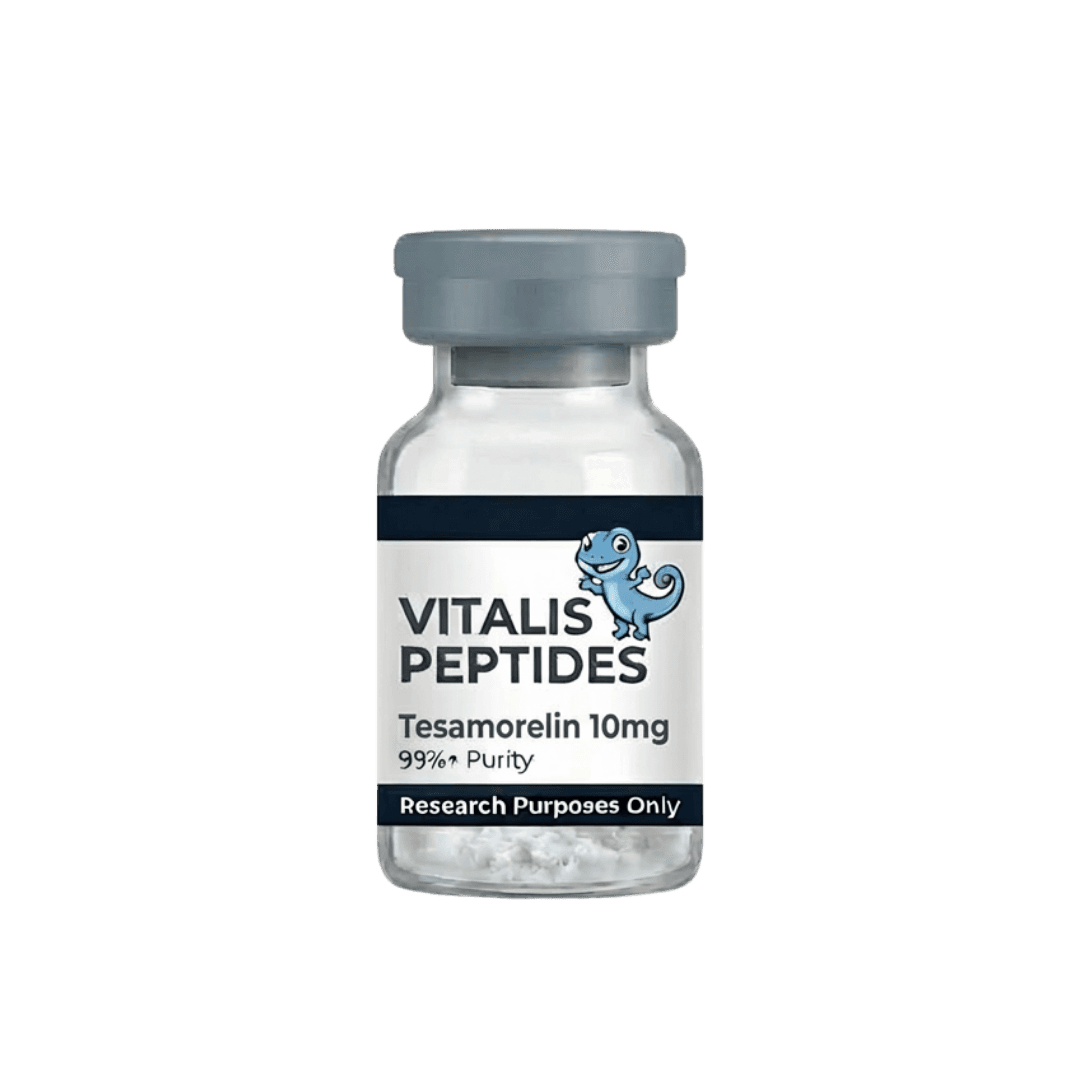
Retatrutide (LY-3437943) is a novel triple-receptor agonist targeting GLP-1, GIP, and glucagon receptors simultaneously. It represents a next-generation approach in metabolic signalling research, with emerging clinical data from the TRIUMPH programme suggesting potent effects on body composition and energy homeostasis.
Retatrutide is a single-molecule tri-agonist that engages three distinct incretin and metabolic receptors: the glucagon-like peptide-1 receptor (GLP-1R), the glucose-dependent insulinotropic polypeptide receptor (GIPR), and the glucagon receptor (GCGR). This triple-receptor engagement differentiates it from dual agonists such as tirzepatide.
Activation of GLP-1R slows gastric emptying, enhances glucose-dependent insulin secretion, and modulates appetite-regulating circuits in the hypothalamus. GIP receptor activation appears to amplify insulin sensitivity and may contribute to lipid metabolism in adipose tissue. The inclusion of glucagon receptor agonism is hypothesised to increase energy expenditure through hepatic glycogenolysis, thermogenesis, and fatty acid oxidation — a mechanism absent from GLP-1-only or dual-agonist compounds.
Preclinical models have demonstrated that the glucagon component promotes hepatic lipid clearance without significant hyperglycaemia, as the concurrent GLP-1R and GIPR activation counterbalance gluconeogenic effects. Phase 2 clinical data from the TRIUMPH-2 trial (Jastreboff et al., 2023) reported dose-dependent reductions in body weight of up to 24.2% at 48 weeks, with concurrent improvements in glycaemic markers. The compound is being investigated in Phase 3 trials across obesity and type 2 diabetes populations. Its multi-receptor pharmacology positions it as a key research tool for studying metabolic pathway crosstalk.
Triple-hormone-receptor agonist retatrutide for obesity — a phase 2 trial
Jastreboff AM, Kaplan LM, Frías JP, et al. · New England Journal of Medicine (2023)
Phase 2 trial demonstrating up to 24.2% body weight reduction at 48 weeks with retatrutide in adults with obesity, with dose-dependent efficacy across treatment arms.
DOI: 10.1056/NEJMoa2301972Retatrutide, a GIP, GLP-1 and glucagon receptor agonist, for people with type 2 diabetes: a randomised, double-blind, placebo and active-comparator controlled, parallel-group, phase 2 trial
Rosenstock J, Frias JP, Jastreboff AM, et al. · The Lancet (2023)
Phase 2 data showing significant HbA1c reductions and body weight loss in type 2 diabetes patients treated with retatrutide versus placebo and dulaglutide.
DOI: 10.1016/S0140-6736(23)01053-XLY3437943, a novel triple glucagon, GIP, and GLP-1 receptor agonist for glycemic control and weight loss: From discovery to clinical proof of concept
Coskun T, Urva S, Roell WC, et al. · Cell Metabolism (2022)
Preclinical and early clinical characterisation of the tri-agonist, demonstrating superior weight loss and glycaemic control compared to mono- and dual-agonists in animal models.
DOI: 10.1016/j.cmet.2022.07.013LY3437943, a novel triple GIP, GLP-1, and glucagon receptor agonist in people with type 2 diabetes: a phase 1b, multicentre, double-blind, placebo-controlled, randomised, multiple-ascending-dose trial
Urva S, Coskun T, Loh MT, et al. · The Lancet (2022)
First-in-human multiple-ascending-dose data confirming safety, tolerability, and pharmacodynamic activity of retatrutide in type 2 diabetes subjects.
DOI: 10.1016/S0140-6736(22)01936-4Direct bacteriostatic water gently against the vial wall — do not agitate or shake. Allow the lyophilised powder to dissolve fully (1–3 minutes). Swirl gently if needed. Avoid repeated freeze-thaw cycles.
Use reconstitution calculatorLyophilised: store at or below 5 °C for up to 12 months. Protect from light. Reconstituted: refrigerate at 2–8 °C and use within 30 days. Do not freeze reconstituted solution.
Retatrutide engages three receptors (GLP-1R, GIPR, and GCGR) whereas tirzepatide targets only GLP-1R and GIPR. The additional glucagon receptor agonism is hypothesised to drive hepatic lipid clearance and thermogenesis, which may account for the greater body weight reductions observed in Phase 2 trials.
The TRIUMPH-2 Phase 2 trial (Jastreboff et al., NEJM 2023) reported up to 24.2% body weight loss at 48 weeks. A parallel Phase 2 trial in type 2 diabetes (Rosenstock et al., Lancet 2023) demonstrated significant HbA1c reduction. Phase 3 trials are ongoing.
Reconstitute with 1–2 mL of bacteriostatic water per 10 mg vial. Direct the solvent against the vial wall and allow the lyophilised pellet to dissolve without agitation. Store reconstituted solution at 2–8 °C and use within 30 days.
Preclinical and clinical data suggest the concurrent GLP-1R and GIPR activation counterbalances glucagon-mediated gluconeogenesis. Phase 2 trials showed improved — not worsened — glycaemic markers, indicating net glucose-lowering effects.
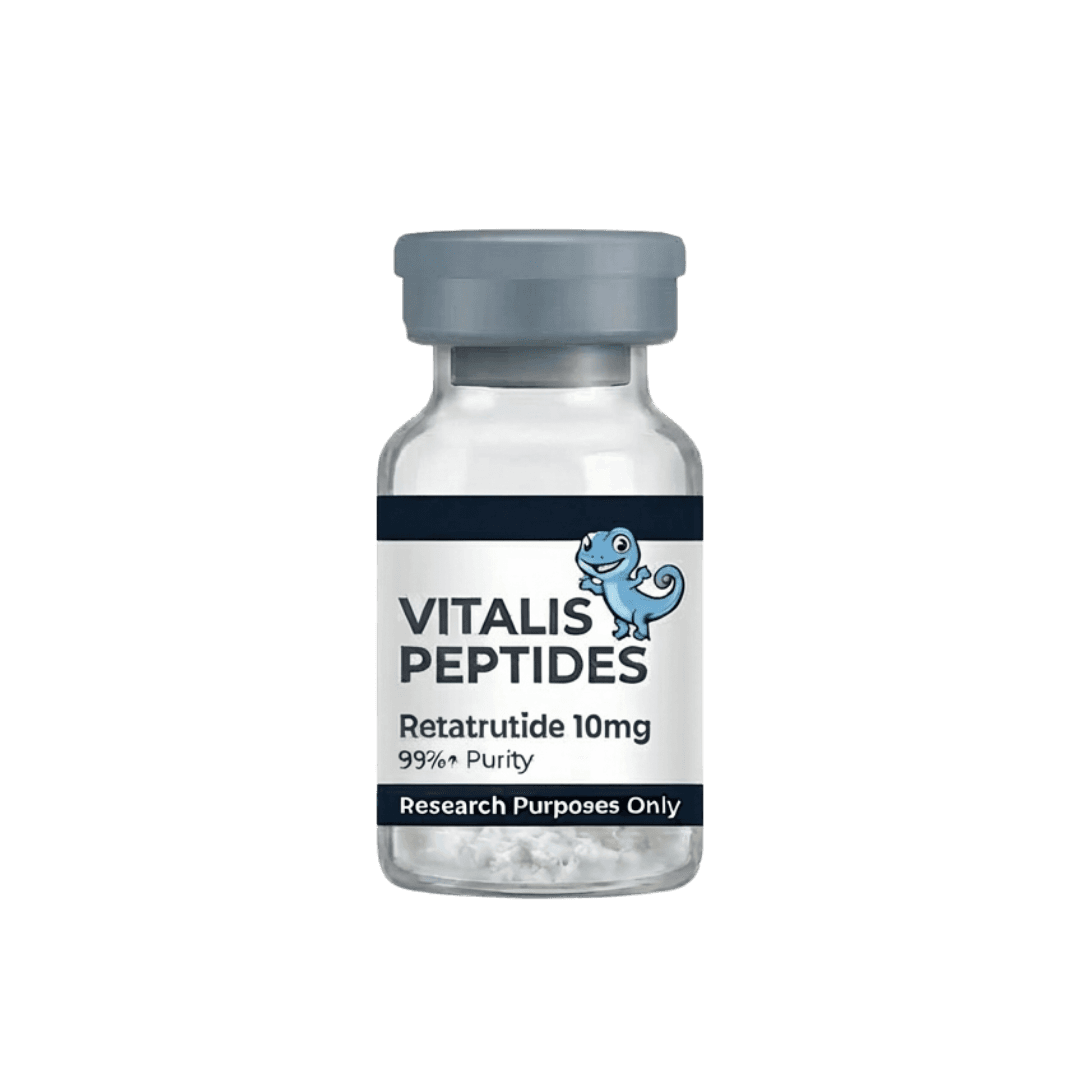
For research and laboratory purposes only. Not for human use. These statements have not been evaluated by the Therapeutic Goods Administration (TGA). This product is not intended to diagnose, treat, cure, or prevent any disease.