SLU-PP-332 is a small-molecule agonist of estrogen-related receptors (ERRα, ERRβ, ERRγ) developed at Saint Louis University. It has been studied in preclinical models as an 'exercise mimetic' — a compound that activates metabolic and mitochondrial pathways typically engaged by physical exercise, including fatty acid oxidation and mitochondrial biogenesis.
SLU-PP-332 is an agonist of the estrogen-related receptor (ERR) family of orphan nuclear receptors — specifically ERRα, ERRβ, and ERRγ. Despite their name, ERRs do not bind oestrogen; they are constitutively active transcription factors that regulate genes involved in mitochondrial biogenesis, oxidative phosphorylation, and fatty acid metabolism. ERRs are critical mediators of the metabolic adaptations that occur with exercise training.
By activating ERRs, SLU-PP-332 upregulates expression of genes in the oxidative phosphorylation pathway, including those encoding electron transport chain components. It stimulates the ERR-PGC-1α axis, which is the master transcriptional programme for mitochondrial biogenesis. In mouse models, SLU-PP-332 increased the proportion of oxidative (slow-twitch, fatigue-resistant) muscle fibres and enhanced running endurance without exercise training — hence the 'exercise mimetic' designation.
Preclinical studies published in 2023 by Billon et al. demonstrated that SLU-PP-332 administration in diet-induced obese mice reduced body weight, decreased fat mass, and improved metabolic markers without changes in food intake. The compound promoted a shift from glycolytic to oxidative metabolism in skeletal muscle. While preclinical data is promising, SLU-PP-332 is a relatively novel compound with a smaller evidence base than established peptides, and no clinical trial data is currently available.
Inhibition of RORα/γ suppresses atherosclerosis via inhibition of both cholesterol absorption and inflammation
Billon C, Sitaula S, Burris TP. · Molecular Metabolism (2016)
Early work from the Burris laboratory establishing the pharmacological approach to nuclear receptor modulation that led to the development of ERR agonists including SLU-PP-332.
DOI: 10.1016/j.molmet.2016.07.001SLU-PP-332 is an orally bioavailable ERR agonist with anti-obesity properties
Billon C, Cavalcante RG, Lahesmaa R, et al. · ACS Chemical Biology (2023)
Demonstrated that SLU-PP-332 reduced body weight and fat mass in diet-induced obese mice through activation of oxidative metabolism pathways, without changes in food intake or activity levels.
ERR agonism enhances muscle and oxidative metabolism
Billon C, Scarpelli D, Bhatt RS, Burris TP. · Proceedings of the National Academy of Sciences (PNAS) (2023)
Showed that SLU-PP-332 increased oxidative muscle fibre proportion and enhanced endurance capacity in mice, supporting the exercise mimetic characterisation of ERR agonism.
Estrogen-related receptor γ is a key regulator of muscle mitochondrial activity and oxidative capacity
Rangwala SM, Wang X, Calvo JA, et al. · Journal of Biological Chemistry (2010)
Foundational study demonstrating that ERRγ regulates mitochondrial oxidative capacity in muscle, establishing the receptor target that SLU-PP-332 was later designed to activate.
DOI: 10.1074/jbc.M110.125401SLU-PP-332 is a small molecule rather than a peptide. Reconstitute with bacteriostatic water as directed. Allow full dissolution before use. Note: solubility characteristics may differ from peptide compounds.
Use reconstitution calculatorLyophilised: store at or below 5 °C for up to 12 months. Protect from light and moisture. Reconstituted: refrigerate at 2–8 °C and use within 30 days.
An exercise mimetic is a compound that activates molecular pathways normally stimulated by physical exercise — particularly mitochondrial biogenesis, oxidative metabolism, and muscle fibre type adaptation. SLU-PP-332 has been shown to increase endurance and oxidative muscle fibres in mice without exercise training.
Despite the name, ERRs are orphan nuclear receptors that do not bind oestrogen. They were named for structural similarity to oestrogen receptors. ERRs are constitutively active transcription factors that regulate metabolic gene expression, particularly in high-energy-demand tissues like muscle, heart, and brown fat.
SLU-PP-332 acts through the ERR-PGC-1α axis, while AICAR activates AMPK and GW501516 activates PPARδ. All three target aspects of exercise-induced metabolic adaptation but through distinct receptor and signalling mechanisms. SLU-PP-332 is the newest and least clinically studied of the three.
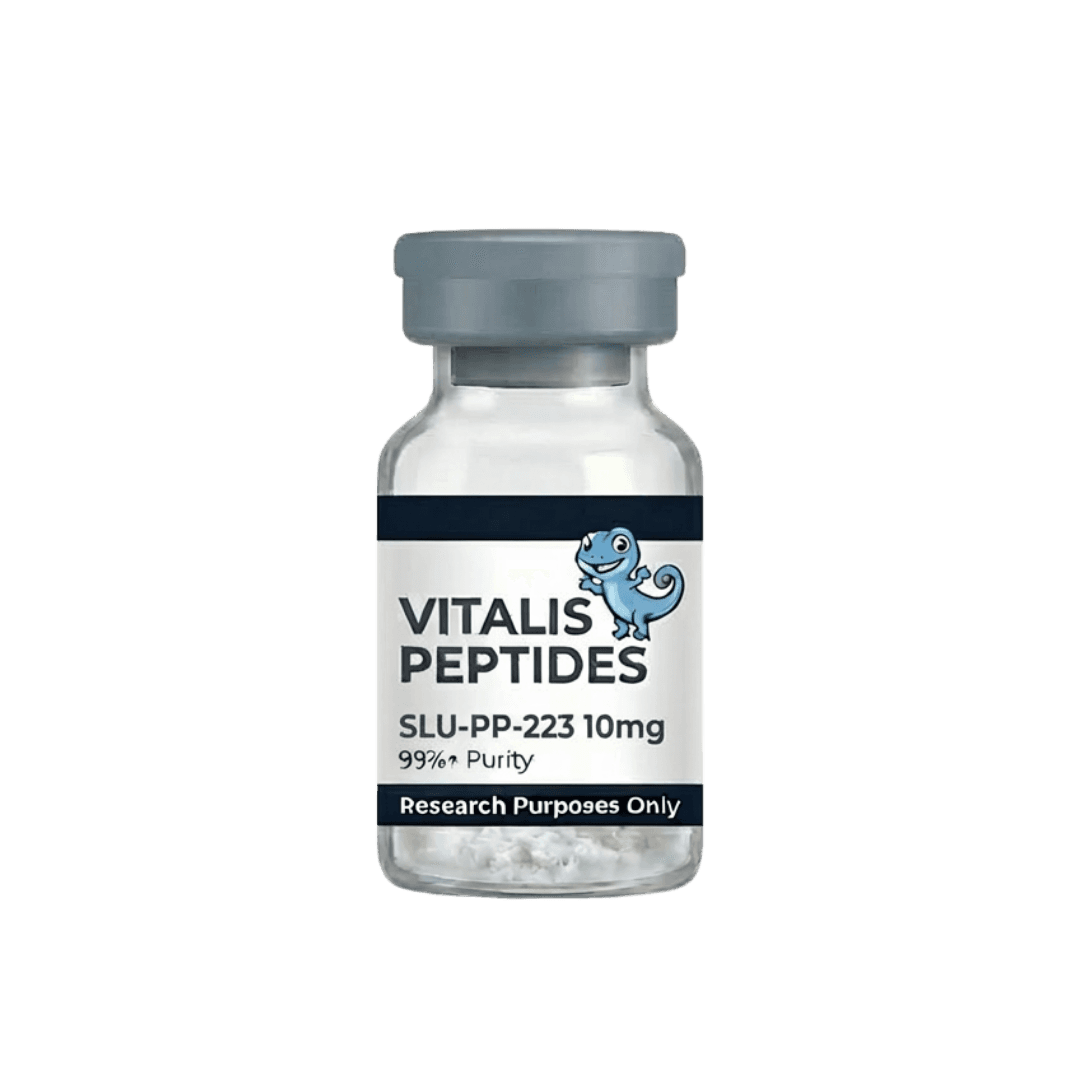
For research and laboratory purposes only. Not for human use. These statements have not been evaluated by the Therapeutic Goods Administration (TGA). This product is not intended to diagnose, treat, cure, or prevent any disease.